Архив рубрики: HIstory

Памятник Анне Зеленовой в Павловске

GRATITUDE OF GENERATIONS TO THE GUARDIAN OF ETERNITY (V.E. GOREVOY. MONUMENT TO A.I. ZELENOVA IN PAVLOVSK)

  1. Idea of Creating the Monument to A.I.Zelenova
  2.  The Idea of Work on the A.I.Zelenova Monument
  3. The Beginning of the Commemoration of A.I.Zelenova’s Memory
  4. The Activities of Public Organizations in the City of Pavlovsk Focus on Realizing the Concept of Creating a Monument to A.I.Zelenova
  5. The Correctness of the Choice of the Final Version of the Monument to A.I.Zelenova
  6.   Completion of the A.I.Zelenova Monument by the Students of V.E.Gorevoi
  7. The Impotrance of A.I.Zelenova Monument for St.Petersburg and Pavlovsk

This inscription is found on the base of the monument honoring Anna Ivanovna Zelenova, the legendary director of the State Museum-Reserve «Pavlovsk.» The phrase “legendary director” is a relatively recent way to describe her. During the Great Patriotic War and the difficult years that followed, Anna Ivanovna and her team, along with their dedicated researchers, never saw their work as legendary. They simply saw it as their responsibility—to protect priceless works of art for our culture and for generations yet to come.

Their unwavering devotion to preserving these treasures speaks to a deep respect for heritage and history, highlighting the vital role of cultural preservation in times of crisis. The monument stands as a lasting tribute to their courage and selflessness, ensuring that the rich legacy of art and history remains alive to inspire and educate those who follow. [1]

Надпись на постаменте памятника Анне Ивановне Зеленовой в Павловске

The monument dedicated to Anna Ivanovna Zelenova in the town of Pavlovsk. Inscription

1. Idea of Creating a Monument to A.I. Zelenova

The idea of creating a monument to Anna Ivanovna Zelenova took more than two decades to come to life. For years, a common stereotype surrounded museum employees: modest, quiet, often shy individuals who served as guides to the world of knowledge. Unlike military leaders, public figures, or renowned artists, they rarely gained widespread recognition.

In the early 2000s, Vladimir Emilevich Gorevoy, a sculptor and member of the Russian Academy of Arts, was asked to create a tribute to the director of the Pavlovsk Museum. He was taken aback. By then, Gorevoy had an impressive body of monumental work under his belt, including the «Partisan Glory» memorial in Luga and statues of notable figures like F.E. Dzerzhinsky and Nikolai Ostrovsky. Yet, he knew very little about Anna Ivanovna Zelenova.

Памятник А.И.Зеленовой в Павловске. Фрагмент. Скульптор В.Э. Горевой

The monument to Anna Ivanovna Zelenova in Pavlovsk  (a fragment) Sculptor V.E. Gorevoi

His perception of museum staff might have remained unchanged if it weren’t for his growing friendship with the Pavlovsk Museum team. This connection began when Nikolai Sergeyevich Tretyakov, who led the museum from 1997 to 2012, invited Gorevoy to various events. Through these encounters, he learned about Anna Ivanovna—a woman who appeared delicate but possessed extraordinary strength. After the war, she took on the enormous challenge of restoring the Pavlovsk Palace and Park, a task that many men might have shied away from.

Памятник Анне Ивановне Зеленовой в Павловске. Скульптор В.Э. Горевой

The monument to Anna Ivanovna Zelenova in Pavlovsk  (a fragment) Sculptor V.E. Gorevoi

Gorevoy found it remarkable that a woman had held such a demanding leadership role. At that moment, Vladimir Emilevich thought to himself, «How remarkable it is for a woman to be the museum director and accomplish such an immense amount of work!» But the story he had just heard didn’t simply pass as a fleeting curiosity; it stayed with him. Later, when speaking to the Culture Channel, he admitted that it was not anyone else but Adelaide Sergeeva Yolkina, the museum’s collections curator at the Pavlovsk State Museum-Reserve, who had actively encouraged him. He jokingly described her as an «art historian with a bulldog grip.» She was deeply determined that people should know and remember Anna Ivanovna, who had been her spiritual guide.

Around the same time, Adelaida published her memoir, «Do This for Me.» The book was heartfelt and carefully crafted, enriched with numerous photographs and archival materials. Her dedication to preserving Anna Ivanovna’s legacy was more than a personal mission; it became a valuable contribution to the cultural heritage of the museum. Adelaida’s passionate commitment reminds us of how vital it is to honor and celebrate those who shape our understanding of art and history. [2]

2. The Beginning of Work on the A.I. Zelenova Monument

The idea for the monument began with a sculptural portrait of a young woman, just over a meter tall. Gorevoi later developed this initial piece into the final design. Vladimir Emilevich drew inspiration from a pre-war photograph of Anna Ivanovna. In the image, the 29-year-old museum director is seated on a step ladder beside a bookcase. Pausing briefly from her work, she seems poised to reach for another volume from the shelves of the historical library in Pavlovsky Palace.

Скульптурный портрет Анны Ивановны Зеленовой. Автор В.Э.Горевой

Sculpture portrait-sketch of A.I. Zelenova monument. Kept in the Pavlovsk Palace-Museum

The sculptor chose to capture this intimate moment from a museum worker’s daily routine. He carefully rendered every detail—Anna Ivanovna’s clothing, hairstyle, glasses, and even the ladder steps, modeled after those designed by Karl Ivanovich Rossi, the library’s namesake. The scene is portrayed with documentary accuracy: during the years before and during the war, Anna Ivanovna diligently took notes, studied, and sketched exhibits. These notes and drawings later became the cornerstone of her approach to restoring historical monuments, playing a crucial role in bringing the palace’s decor, sculptures, and interiors back to life.

Памятник Анне Ивановне Зеленовой в Павловске. Скульптор В.Э. Горевой. Фрагмент

The monument to Anna Ivanovna Zelenova in Pavlovsk  (a fragment) Sculptor V.E. Gorevoi

3.The Beginning of the Commemoration of A.I. Zelenova’s Memory

Adelaide Sergeyevna held a deep admiration for the portrait, which sparked more frequent conversations about creating a monument in her honor. Although the artist had not yet been selected, efforts were already underway to find a suitable location for the memorial sculpture. Federal regulations prohibited placing it in the park, so in 2013, to mark the 100th anniversary of A.I. Zelenova, a commemorative plaque with an informational inscription was installed by a bench in the central zone of the Park. The plaque highlighted how much Anna Ivanovna treasured that particular spot, where she would often relax after work alongside her mother, Anna Timofeyevna. The view from there is stunning—many artists would describe it as a perfect “postcard” scene, featuring stone vases and marble lion statues on the Italian staircase, the valley of the Slavianka River, and the elegantly balanced the Temple of Friendship designed by Charles Cameron.

Павловский парк. Вид на реку Славянку и Храм Дружбы. Примерно здесь находилась любимая скамейка Анны Зеленовой

Anna Ivanovna Zelenova’s favorite bench was located around here.

About a year later, the plaque was taken down and a new site for the monument was selected outside the park. The chosen location was on Sadovaya Street, nestled between the Church of Mary Magdalene and the old palace greenhouses, now in ruins. A foundation stone was laid on a hill that offers a clear view of the palace and park, especially during winter. This spot once hosted a two-story building typical of Pavlovsk’s late 19th to early 20th-century architecture, though today only fragments of its stone foundation remain hidden among lilac bushes. Remarkably, this building survived the war and initially served as the museum’s administrative offices on the first floor, with the director and staff occupying the second.

Памятная мемориальная доска на месте, где находилась первая дирекция Павловского музея-заповедника

The memorial plaque on the place where located the house.On its  first floor was the museum’s administration, the second floor was home to A.I. Zelenova.

As V.E. Gorevoy recalled, A.S. Yolkina remained steadfast in her dedication to bringing the memorial to life. Even while hospitalized and shortly before her death, she reached out to Vladimir Emilevich, urging him to ensure the monument was completed. The artist promised to support her and the museum, though he was unprepared for her passing so soon after. Feeling bound by his word, he knew he had no choice but to see the project through to the end.

4. The Activities of Public Organizations in the City of Pavlovsk Focus on Realizing the Concept of Creating a Monument to A.I. Zelenova

Over time, the concept of honoring Anna Zelenova began to take clearer shape, driven by various public organizations. The initiative started with the Society of Pavlovsk Lovers and later expanded to include the group «Beautiful Pavlovsk.» In 2015, the Culture and Leisure Center «Pavlovsk» hosted an exhibition featuring models for a potential monument.[3]

The portrayals of Anna Zelenova varied greatly, some offering quite unique perspectives. One artist showed her as a young museum director, dressed in a light summer dress just above the knees. Another depicted her as a mature, dignified woman sitting leisurely on a classic post-war Soviet bench, relaxed and unhurried as if enjoying a vacation. Those who knew Anna Ivanovna noted that she was never one to stay still for long and certainly did not fit the image of a conventional office director.

One of the more stylized interpretations seemed influenced by heroines from 1950s Soviet cinema, showing her in a bronze statue pose with a determined look and purposeful stride, as if battling the wind. This version felt somewhat formal and distant. In the end, Vladimir Emilievich Gorevoy’s sketch won the competition, earning both artistic praise and the affection of viewers. Its depth and realism struck a chord with many, including those who had known Anna Ivanovna and shared in the challenges of rebuilding Pavlovsk after the war.

5. The Correctness of the Choice of the Final Version of the Monument to A.I. Zelenova

The decision to choose Gorevoy for the final design of the monument to A.I. Zelenova was far from coincidental; it reveals a profound connection between two extraordinary individuals, even decades apart. Both Anna Zelenova and Vladimir Gorevoy dedicated themselves wholeheartedly to their art, each excelling in their own right. They shared a steadfast determination and a relentless pursuit of high artistic ideals. Their deep patriotism and commitment to improving their homeland—especially the great city of St. Petersburg-Leningrad—were central to their lives.

Anna Ivanovna, along with her like-minded peers, worked tirelessly to restore the ravaged palace and park complex in Pavlovsk. Meanwhile, Vladimir Emilievich devoted his career to honoring Russia’s notable figures through his sculptures. His works, skillfully shaped from stone, bronze, and marble, vividly bring the country’s history to life. For Gorevoy, St. Petersburg is more than a city of world importance; it is the perfect backdrop for monuments—sculptures that serve as a stone chronicle, telling epic stories. The characters in Gorevoy’s work all have rich, intertwined biographies connected deeply to their grand, imperial hometown. This philosophy was the heart of his artistic vision.

6. Completion of the A.I. Zelenova Monument by the Students of V.E. Gorevoy

Tragically, the sculptor passed away in June 2019, just before the unveiling of the world’s first monument honoring a museum curator.[4] Yet, his vision lived on through the dedication of his skilled students. Vladimir Emilievich generously shared his expertise and artistic passion at the St. Petersburg Academy of Fine Arts, where he taught for many years. This first-ever monument to a museum curator became a genuine symbol of public support, with community-raised funds covering the costs of materials and installation.
Sculptors Andrey Martyanov and Rustam Igamberdiyev took on the task of enlarging the original model and bringing the monument to full scale, working without pay in the spirit of their mentor.[5],  The rights to the monument’s creation were entrusted by V.E. Gorevoy’s widow, Tatyana Karmasheva, to the public organization «Beautiful Pavlovsk.»

During the course of the project, the monument’s location was changed. While the initial site had historical significance, the new placement offers better accessibility for visitors to the park. The previously unnamed square was renamed in honor of Anna Zelenova and is nestled between Konyushennaya and Hospitalnaya streets.

Today, this spot serves as a central focal point. The sculpture, standing nearly life-sized at two meters tall atop a 1.5-meter pedestal, blends seamlessly with its environment. It commands attention from every angle, with every detail thoughtfully arranged to convey its story. Nearby trees provide a natural backdrop, especially striking in early spring and the golden hues of autumn. The nearby former palace stables frame the monument with a classical arch, adding to its visual impact.

In addition, the monument is situated close to several historic landmarks, including the Grand Pavlovsk Palace, the Church of Mary Magdalene, and the Iron Gates designed by K.I. Rossi, enriching the cultural landscape of the area. [6]

7. The Importance of A.I. Zelenova Monument for St. Petersburg and Pavlovsk

To sum up, the creation and unveiling of A.I. Zelenova monument represent a meaningful chapter in the history of our country, as well as for St. Petersburg and Pavlovsk.

Firstly, the city has gained a remarkable piece of art, crafted with great skill and professionalism. Beyond its artistic value, the monument serves an educational role, inspiring visitors to explore the recent history of the museum-reserve more deeply. Most importantly, it stands as a powerful reminder that significant achievements are not only made on battlefields but also through the dedicated work of individuals whose contributions often go unnoticed by the wider public. For the sculptor, Anna Zelenova herself became a figure with a compelling life story.

Her accomplishment reflects the enduring spirit of the people, and she stands as a proud symbol of that resilience. May the bronze statue of Anna Ivanovna Zelenova welcome and bid farewell to countless generations visiting the Pavlovsk Museum-Reserve—a place of natural beauty and exceptional artistry.

[1] My article «The Wonders that Art Around Us» focuses on the post-war history of the Pavlovsk Palace Museum and the work of A.I. Zelenova and her colleagues.

[2] Елкина А.С.  Сделайте это для меня. – Санкт-Петербург: Знание, 2005

[3] In 2013, public organizations in Pavlovsk appealed to the governor of St. Petersburg for funding to install a monument but were denied. The request was declined as no budget funds are allocated for the installation of stone and bronze monuments.

[4] The monument to A.I. Zelenova in Pavlovsk was unveiled on May 18, 2022, coinciding with International Museum Day.

[5] The team of sculptors received professional consultations from G.D. Yastrebenecky, a corresponding member of the Russian Academy of Arts and a distinguished artist of the RSFSR.

[6] O.S. Romanov is the author of the architectural design of the A.I. Zelenova monument.


Literature and Website References

  1. Елкина А.С. Сделайте это для меня. – Санкт-Петербург: Знание, 2005
  2. Massie, Suzanne. The Life of a Russian Palace. Heart Tree PR, 1990
  3. https://pushkin.spb.ru/photogallery/the-opening-of-the-exhibition-of-projects-of-a-monument-to-anna-ivanovna-zelenova.html For information about the unveiling of the monument to Anna Ivanovna Zelenova, visit this link.
  4. http://pages-zg.ru/?p=6132
  5. https://peterburgru/restplaces/pamyatnik-a-i-zelenovoy-31236.html
  6. https://rusmir.media/2012/01/01/skulptor
  7. https://www.rah.ru/the_academy_today/the_members_of_the_academie/member.php?ID=51448 Sculptor Vladimir Gorevoi
  8. https://pavlovskmuseum.ru/news/calendar/2746/   Check out the Pavlovsk Museum’s news on their calendar.
  9. https://www.youtube.com/watch?v=vzgri7YGlOg You can watch an interview with sculptor Vladimir Gorevoy in St. Petersburg Meetings, Part 2 on YouTube.
  10. https://www.youtube.com/watch?v=zYro_caNzI8 Sculptor Vladimir Gorevoi about A.I. Zelenova
  11. For more about A.I. Zelenova, see his interview here and N.N. Gromov’s memories of V.E. Gorevoy here.
St. Petersburg Academy of Arts: the history of educational activity beyond the school curriculum. A brief research

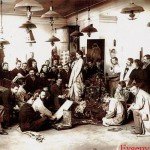
Painting, Sculpture, Architecture, and Education — all these words can be read above every of the entrance doors in the main round-shaped courtyard of the Academy of Arts building. These words are seen as the motto of this educational institution, the oldest Russian Art Academy. Every year, tens of students, the future painters, graphic artists, architects, and art critics enter The I.E. Repin St.Petersburg State Academy Institute of Painting, Sculpture and Architecture. Being within the walls of the Institute, not only students have  the professional training and gain the necessary skills, but interact with their mentors, any of whom are outstanding figures in art and culture, persons of the world reputation. Thereby, the cultural and educational environment so beneficial for students has been created.

At the same time, the educational activity of the Academy of Arts in the past and the I.E. Repin Art Institute now has never confined itself to the school activity only. The importance of this fact can hardly be overestimated. A considerable amount of work in this area has been done since the foundation of the Academy, and nowadays this work is being done to support art-lovers in their desire to acquire basic knowledge and gain the necessary skills in arts.

These days, the educational activity in the I.E. Repin Art Institute is very versatile. Apart from the formal preparatory courses for the future applicants, who are willing to take courses to prepare for the entrance exams, there are other courses such as the Evening Drawing Classes and the Faculty of Professional Development for the teachers of art schools and colleges. These departments of the Academy follow the long-lasting historical tradition which dates back to the 19th century.     As far back as in the years of 1835-1841, Pavel Andreevich Fedotov, an outstanding Russian artist attended the Academical evening drawing classes. He had the ticket number 241, which gave him the right to participate in these training sessions.  Admittedly, P.A. Fedotov didn’t become a professional artist within the days. Serving as a Beefeater at the Finnish Regiment, he drew just for his delight and very often doing a favour for his friends when they asked him to draw the caricatures of their brother officers. He made the crucial decision to be into art when, as he thought, he wasn’t very young, at the age of 26. He couldn’t resign from the military service immediately due to financial reasons; that’s why he attended the Academy’s Evening Drawing Classes in his spare time. Pavel Fedotov used any opportunity to acquire skills during the classes as well as while painting and drawing from life. [1] 

Another reason to attend the classes regularly was the proximity to the Academy from the Finnish regiment’s military quarters, which also were located on Vasilievsky Island. Therefore, it was very convenient for Fedotov to set aside the time for art studies. It is also known that Pavel Fedotov was assigned directly to the second form after the entrance exams: students of this year must copy exceptional drawings of famous artists. However,  Pavel Fedotov attended academic classes occasionally, when, in his opinion, it was necessary.

The exact meaning of these words, the courses weren’t a professional educational institution; Students needn’t to follow a particular schedule; attendance of the classes was the matter of their choice. Most of the audience consisted of amateurs. Servicemen, merchants, in other words, people of a great variety of ranks and social positions came there. At the beginning of 1830-s Nikolai Vasilievich Gogol also attended these classes.

The close collaboration between the Society of the  Society for the Encouragement of the Arts (which was also called The Society of the Encouragenent of the Artisits until 1875) and the Academy played an important part in the history of the Academy’s educational extra-curricular activity. Later the Society for the Encouragement of the Arts became to be called as the Imperial Society for the Encouragement of the Arts. In 1820, three private individuals P.A. Kikin, the secretary of state, Prince I.A. Gagarin, and lieutenant-colonel A. I. Dmitriev-Mamonov founded the Society for the Encouragement of the Arts. Then two more art-lovers V. I. Keel and F. F. Shubert joined to them. Those five people signed on November 30, 1821, the initial «Basic Rules for the Guidance and Activity of the Society.» The aim of the Society was the popularization of artworks by organizing permanent exhibitions, art lotteries and the commissions on artworks.

.The 1820-30-s were the years when the Academy experienced significant financial difficulties that affected its educational activity. A.I.Olenin was the President of the Academy of Arts at that time. Many investments were made in the construction of the new buildings, reconstructions of the old facilities and improving living and studying conditions of the students. Therefore, there weren’t extra funds for the incentive payments for the successful students. The Society for the Encouragement of the Arts organized in addition to the Academy medals, three medals for distinguished students: 1 medal of the first rate and two medals of the second. In 1821 Karl and Alexander Brullov were awarded and sent overseas for the additional vocational training. In 1827 Alexander Ivanov, and in 1830 N.G.Tchernestov and A.V. Tyranov were also sent abroad. The Society also allocated means for the trips across Russia. The Society of the Arts Promotion also paid for the tuition of those young artists who took classes from some of the famous artists. N.G. Tchernestov learned from Vorobiov, N.S. Krylov learned from Venetsianov, A.N. Mokritsky, and T. G. Shevchenko studied at the Karl Brullov’s studio.

In 1824, the Society for the Encouragement of the Arts organized a special class where attendants could paint and draw from live models. Everyone could attend this class, even though they were not allowed to do this at the Academy. The Society paid significant sums of money (about 1500 roubles a year) for the attendance tickets for art lovers making them possible to attend the Academy’s painting and drawing classes.[2]

The new stage of the educational extra curriculum activity of the St.Petersburg Academy of Arts had started since the second third of the 19th century. The new drawing school, founded on E.F.Kankrin’s initiative, had appeared in 1839. Children from a lower class could enter that school. It was a purely technical school, which was patronized by the Society for the Encouragement of the Arts. Later, in 1857, this school was taken over by the Society. After the closure of the lower classes of the Arts Academy in 1959, many of former students of the Academy continued to study at that school. Instead of the two classes of drawing as well as the classes of sculpture and design, five classes of general drawing and ten special classes were set up. 1000 students attended that school where 15 teachers worked. It was a single school, which students were prepared for the entrance exams to the St. Petersburg Academy of Arts. Later on, the branches of that school were opened in St.Petersburg’s suburbs (on the Peterhof and Shlisselburg roads) In 1870 the Museum of Art and Industry was inaugurated in the school premises, and since 1861the Friday Drawing Classes started functioning. The new curriculum was created in 1868. There were two departments at that school: the department of general drawing and arts and crafts department. The programs of the Drawing Department consisted of the following levels:

Preparatory

  1. The drawing of the 3-D objects and shading
  2. The drawing of the ornaments of different styles from the plaster casts
  3. The drawing of the parts of the human body and plaster masks
  4. Pencil drawing from the plaster cast busts and plaster casts full height sculptures
  5. Sunday class. The pencil drawing of the live model.
  6. Watercolour copying from the classic originals.
  7. Watercolour painting of the real objects.
  8. Arts and Crafts Department The acquaintance with the trades and technical skills of each handicraft.
  9. Draftsmanship
  10. The Composition of the Ornaments
  11. Sculpting the simple ornaments from clay.

44.Woodcut from the plaster casts, wooden models, and drawings

  1. Woodcut and lithography.
  2. Painting on porcelain, highly glazed pottery, glass and copper enamel.

There were a museum and library at school.

I.E.Repin tells us about his school studies in his Memoirs and Reflections (Remote Past).[3] 

 At that time the School was located in the building of the Stock Exchange, near the Palace Bridge. The tuition fee, which was about 3 roubles per year, was quite affordable for the students. The first work for which I.E. Repin received the highest grade, number 1, was his drawing of the burdock leaf from the plaster cast.

At that time, many great tutors, such as a P.I: Zerm and R.K. Zhukovskii taught at school. Nevertheless, the leading figure was I.N. Kramskoy, who won full trust and respect of the students. He used to come to the students only on Sundays, so it was tough to take the most advantageous position to paint live models during Kramskoy’s training sessions. Shortly, I.E. Repin realized that he got everything possible from the School of the Arts Promotion Society, and he was advised to attend the lectures and training sessions at the St.Petersburg Academy of Fine Arts as an auditor. To achieve this goal Repin needed to arrange to be let in with the Academy’s inspector. He also needed to pass the exam on drawing the plaster cast head and pay a quite significant for those days fee — 25 roubles per year. He doesn’t have such a sum; that’s why, following the advice of his acquaintances, Repin found the patron, who paid for his tuition.

The second area of the Academy’s extracurricular activity in the second half of the 19th century was teaching the future gymnasium and elementary drawing school teachers. It was vital for the period of the development of capitalism in Russia. During the first century of its existence, the Academy had been solved such global problems as arts education and guidance of painters, sculptors, and architects, who were capable of performing high state orders and promote fundamental state ideas. Not only in Russia, but in other European countries, where the fast pace of the industrial development led to the necessity in highly qualified specialists, it was the need of the people engaged in craftsmanship and who have artistic skills. All in all, it was vital to have the people who could, draw, design and decorate the things of everyday use and improve the appearance of this stuff. For this purpose, it was not necessary to have the higher artistic education. For the first time, it was necessary to arrange the educational process in gymnasiums, colleges, and elementary art schools, to meet the demands of the modern society. Although the students in the Academy were trained by the highly qualified specialists: painters, sculptors, and architects, however, students weren’t taught the teaching methods. The Academy’s Sunday Drawing classes were set up in 1872 to work out this methodology and give the examples of teaching the subjects related to art.  The senior students of the Academy were engaged to lead the training sessions for the future drawing teachers.  For the Academy of Fine Arts, it was the innovation. [4]

Later, those classes were closed, and The Pedagogical Courses for the Preparation of Drawing Teachers were set up in 1879 under the aegis of Grand Prince Vladimir Alexandrovich. The primary purpose of these courses was stated by V.P.Shemiot and V.F.Evald (the director of the St.Petersburg 1st Technical College) in the Report on Founding Pedagogical Courses under the protection of the Imperial Academy of Arts. In their opinion, to raise the social status of the drawing teacher it is necessary to apply to  the authorities  to help the people who are honoured to be the teachers due to the new regulations in the educational institutions where they are to work, giving them the same rights as to other teachers who teach other school subjects and award them with the same cash and pension. Similarly, the same rights for a pension should have the teachers at the Academy of Art’s normal school. The traditional school, attached to those courses, was also found to give the illustrative example of the correct and rational drawing as a general subject included in the school curriculum. All in all, the aim of these courses was «the creation of the nurseries of ideal teachers.»[5]

The normal school, which was attached to the courses was founded to bring the teaching methods given in these classes to real life. The program of these courses was planned for two years. In the first year, the attendees gained the theoretical knowledge, attending the lessons of the experienced teachers and making their learning guides and albums for students. The second year was devoted to practical training sessions and the writing analysis of the lessons which were given by the students of the courses at the normal school. At the time the sessions started working, there weren’t any restriction to the number of the attendees. About 50 people a year were admitted to the courses. Later on, the enrolment tests were introduced. Only those students of the Academy of the  Arts who studied in the class of the Live Models Painting and drawing could attend these courses. It was not like a few years ago when the first-year students of the Plaster Cast classes, were also permitted for attending the courses. In 1887-1888 the lessons on calligraphy were added to the school curriculum.

The curriculum in the normal school attached to the courses was planned for the four-year period. The children aged between 10 and 14 were admitted to the first form, in the second form the students of 11-15 years old were taught, and the third form was attended by the students between 12 and 16 years old. The certificate of education was required for the application to the school.

«School must restrain the student individuality within the defined bounds with the purpose of getting them accustomed to self-restriction, thereby giving them reasonable and purposefully the possibility to apply their will when they are involved in their independent activity in any area, not the arts only,»- in this way the founders[6] of the school understood the primary goals of this educational institution.

At that time, the professors of The Academy of Arts tried to demonstrate and give the proofs of the leading role of drawing in the contemporary life to the society. Their activity was aimed to educate people and get this message across. So, in the report of A.V.Makovsky, the academician of painting, which was addressed to the 4-the International Congress on the Drawing and Applied Arts and Crafts, Education, it was said: «To study somebody how to see the world around us — is a very challenging task. In the case when our capability to understand is well-developed, everything around us  easier comes to our mind and more clearly understood. The teacher of drawing is — the closest assistant of the university professor.» «It will be simpler to make new ways if the government takes care of the all-round development of our country’s industry to make drawing  turned from comprehensive into the genre of art which is applicable to real life.» On the other hand, the presenter focused on the creative approach to the drawing education. «We don’t need to give only skills, but knowledge to the students,» — it was said in the report. The teaching methodology, which was used in some of the German schools was given as a negative example. [7]

So vital were considered the goals which were set by the Academy’s courses that the special commission consisting of such outstanding artists as A. I. Rezanov, A. I. Somov, D. I. Grimm, V.P.Vereschagin, and V.I.Jakobi were founded. These courses had been functioning until the October Revolution of 1917.

The Revolution of 1917 and all related events made a tremendous impact on all areas of the Academy’s activity, including education and extra-curriculum activity. During more than 30-year period, until the beginning of the 1930s, the Academy had changed three times its official name, and that fact, in V.G.Lisovsky’s opinion «wasn’t  considered as the formality only», it was for «the instability of educational system at that time, uncertainty of its goals and ambiguity of its status.»[8]. This devastating for the academic system period of the dramatic search for the right methods in arts and teaching, finished in 1932 when due to the order of the Government of the Russian Socialist Federative Republic issued on October 11, 1932, was founded the All-Russian Academy of Arts.

The documents, coming from the period of the beginning and the middle of the 1930s, tell us about the work of the courses, which were functioning that time in the Leningrad Highest Artistic and Technical Institute and the Leningrad Institute of Painting, Architecture, and Sculpture.

One of these documents is «The Instruction on the Preparatory Courses for Workers in the Leningrad which is related to April 1930.[9] In this Instruction, it is told about the entrance regulations, terms of study and the budget of the courses. The primary purpose of these sessions was the preparation of the young people from the working class for the entrance exams to the All-Union Institute of Art and Technology. The apprenticeship at these courses was one year, during which the applicants studied particular subjects as well as made up the deficiency in general knowledge. Although the established learning was one year, in fact, the length of study varied for different students, depending on their fundamental skills and knowledge. Some of the students studied at the Courses for more than two years. Those students who finished Courses admitted to the Institute without the entrance exams. The young people from the age 25 who had 5-year of the working service, at least, and the volume of knowledge which was equal to the experience of a graduate of a five-year comprehensive school were admitted to this school.  In addition to this, the young people of the age less than 25 who had only three years of the working service, but with the volume of knowledge of a 7-year comprehensive school was also admitted. The work day at the enterprise where the attendees of the courses worked was two hours less than the work hours of the rest of the workers. For the attendees of the Courses, the classes and training sessions were free. The Courses were financed by the trade unions. By 1937, these courses were called off. [10]

As it is known from the archival documents, summer short-term courses worked in the Academy in summer 1937. The mailing report on the organizational work of these courses has come to our day.

These courses for the teachers of art colleges and schools were founded for the learning of the advanced teaching methodology. During the almost two months (since June, 20 to August, 4) 50 teachers from the different cities of our country, did the tasks on various subjects, such as painting and drawing, attending the lectures of the Institute mentors and also visiting different Leningrad museums and listening to the excursions on different topics.

Apart from the courses, there was the faculty for preparing the working class young people for the future study at the Institute (RABFAC).[11]  As well as the courses, this department solved the similar problem: to prepare the young people for the working class for the education at the Institute. In these courses the classes on professional training were organized, in addition to these classes, the students enrich their knowledge of general subjects to meet the requirements of the comprehensive school. For the young people of different ages the 3-5 year labour experience was required. The training period in the day and evening departments lasted for four years. To be admitted to the Faculty for the Working Class Young People (RABFAC) the applicants should pass the entrance exams. For the full-time education, there was the exam on testing the knowledge of the volume of the 5-year comprehensive school. To be admitted to the evening courses the students were required to pass the exam on general subjects according to the requirements of the 6-year comprehensive school and also the exams on painting and drawing.

 The Great Patriotic War disrupted the flow of the studying process. Many students went to the battlefront, most of them were not destined to come back. Nevertheless, the students and professors honourably got through, and the new page of the history of the Academy’s educational extra-curriculum activity was turned over. In 1944, after the evacuation, the Institute of Painting, Sculpture and Architecture returned home. That year, the Institute was awarded to be named in honour of I. E. Repin, and the All-Russian Academy of Art was reorganized as the Academy of Arts of the USSR..[12]

In 1959 on the initiative of M.G.Manizer, a prominent Soviet sculptor, the evening drawing classes were opened anew. This event becomes a milestone in the history of the Academy of Art and national art in general. The tradition, which comes from the 19th century, when the society had the need in art education, was continuing. The progressive-minded intellectuals had a desire to help people’s artists to raise their professional skills to the proficiency level. Admittedly, after the Great Patriotic War, many art workshops and studios appeared in the different palaces of culture as well as at the various enterprises where art classes were organized. However, the Evening Drawing Classes at the I.E. Repin Art Institute were unique.

Not only were these classes unique because they aimed at the broad audience, and anyone who has the artistic capabilities was able to attend these classes, but for their unique program. This program, which was similar to the curriculum of the Repin Art Institute, helped the attendees to gain the knowledge of the basics of the classical drawing. Many people at that time expressed the desire to be taught in these classes. By the year of 1979 300 people attended these classes. It was a small number in comparison to the number of the students, who attended the Society of Arts Promotion School at the beginning of the 20th century. At that time it was 1772 students..[13]  Despite that, the Academy of Arts and the Repin Art Institute were trying to solve the problems with finding the premises for the classes to satisfy the needs of people who wanted to learn more about art or improve their artistic skills. After the looking for such facilities, the solution was found. It was the apartments in the Liteiny Yard, whose residents were given new accommodation by the city’s authorities

The Evening Drawing Classes curriculum is planned for the four-year period. The Classes curriculum includes: 1st year — the drawing from the plaster cast classical ornament, 2d year- the drawing of the old plaster cast portrait sculpture. 3d year — the portrait from a live model. 4th year — the drawing of a nude model. During these four years, the typical dropout of the students takes place. After finishing the studying course, the students are given a diploma.

 Since the beginning of the 1970s, the educational extra-curriculum activity of the Academy of Arts and the I.E. Repin Art Institute has achieved a new level. In 1972, according to the order of The Ministry of Culture of the USSR from June, 19, the Faculty of Development of Vocational Competence was organized by the Repin Art Institute, for the purpose of the vocational training of the teachers from the different regions of our country.  The faculty aims to educate the specialists who have at least five years of working service after receiving their necessary diploma. Besides the tasks of painting, drawing, and composition and writing research works for the art critics and historians, there were given the lectures on philosophy, aesthetics, and the teaching methods. The students of this faculty visited museums and participated in conferences and seminars. The educational period lasted for a year. During this time 40 experts from the different corners of the USSR improved their vocational skills.

It is worth mentioning the term of the 1980s-90s, which is called the post-perestroika period. Those years not only the I.E.Repin Art Institute but many educational and research institutions experienced the significant difficulties related to finances and structural changes. These years are considered as the turning point in the history of our country. Our life has significantly changed.The Academy and Institute got over with the most difficult situations. Nowadays, the Faculty of the Advanced Vocational Training as well as Drawing classes, where the best professors of the Institute are working, is working very productively. In addition to this, the number of potential students who has the desire to gain knowledge of art is growing every year. Even on the Internet, we can find very enthusiastic comments about the Drawing Classes where almost everyone who has the necessary knowledge in the drawing can apply for tuition and be taught by the experienced teachers for a very reasonable price.[14] In this way, any person who teaches art can improve their level attending the classes at the Faculty of the Professional Development. The continuity of traditions is the primary foundation of the Repin Art Institute and its core rule. Nevertheless, there is greater room for our improvement. The administration of the Academy of Arts and the professors of the I.E. Repin Art Institute is not going to be complacent. Nowadays the new teaching methods based on the great traditions of national and world art, are being elaborated. Particular attention is paid to the individual approach to the Academy students, applicants and the attendees of the courses. These principles are the core of our educational system which gives a support to the talented people, who will probably be  the outstanding artists in the future.

Bibliography

    1. Лисовский В.Г. . Академия художеств, Санкт-Петербург, ООО «Алмаз», 1997
    2. Захарченко Е., Мельников, Ф. Вечерние рисовальные. В журн. «Художник», 1988, № 5
    3. Правила Санкт-Петербургской рисовальной школы для вольноприходящих, СПб, 19…
    4. Э.Кузнецов. Павел Федотов. Л., «Искусство», 1990
    5. Программа рисования нормальной школы при педагогических курсах для приготовления учителей рисования в Императорской Академии художеств. СПб, 19…
    6. С. Кондаков. Императорская Академия художеств. СПб, 1914
    7. Записка об учреждении педагогических курсов при Императорской Академии художеств, СПб, 1876
    8. Четвертый международный конгресс в Дрездене по вопросам обучения рисованию и прикладному искусству. Доклад преподавателя-руководителя педагогических курсов при Императорской Академии художеств академика А.В.Маковского., СПб, 1912.
    9. Положение о педагогических курсах при Императорской Академии художеств. СПб, 1879
    10. Сведения о педагогических курсах и нормальной школе рисования, состоящих при Императорской Академии художеств. СПб., 1895
    11. Краткий исторический очерк императорского общества поощрения художеств. 1820-1890 гг. Составил секретарь общества Н.Собко. СПб, 1890
    12. Столпянский П.Н. Старый Петербург и Общество поощрения художеств, Л., 1928
    13. Репин. И.Е. Далекое близкое. Л., «Художник РСФСР», 1986
    14. НБА РАХ, фонд 7, оп. 1., ед. хр. 950 -974
    15. НБА РАХ, фонд 7, оп. 2, ч.1, ед.хр.495 – 1427
    16. НБА РАХ, фонд 7, оп. 5, ед. хр.4009 – 4214
    17. НБА РАХ, фонд 7, оп. 6, ед. хр.:25 — 1046  


[1] Э.Кузнецов. Павел Федотов. Л, «Искусство», 1990

[2] Краткий исторический очерк императорского общества поощрения художеств 1820-1890 гг. СПб, 1890

[3] И.Е.Репин. Далекое близкое, Л., «Художник РСФСР», 1986. с. 122 -126

[4] Сведения о педагогических курсах и нормальной школе рисования, состоящих при Императорской Академии художеств. СПб,1895

[5] Записка об учреждении педагогических курсов при Императорской Академии художеств, СПб, 1876

[6] Сведения о педагогических курсах и нормальной школе рисования, состоящих при Императорской Академии художеств. СПб,1895, с. 14-15

[7] Четвертый международный конгресс в Дрездене по вопросам обучения рисованию и прикладному искусству. Доклад преподавателя-руководителя педагогических курсов при Императорской Академии художеств академика А.В.Маковского, СПб., 1912 с. 3-9

[8] В.Г.Лисовский. Академия художеств. ООО Алмаз. Санкт-Петербург, 1997, с. 165

[9] Научно-библиографический архив Российской Академии художеств, ф. 7,оп. 1, ед.хр. 950

[10] НБАХ РАХ, ф.7, оп.2,ч. 1, ед.хр. 819

[11] НБА РАХ, ф.7, оп.1, ед.хр. 1099. Проект устава художественного рабочего факультета

[12] В.Г.Лисовский. Академия Художеств, СПБ.,ООО «Алмаз» 1997

[13] НБА РАХ, ф.7, оп. 6,ед. хр. 1046 Письмо учеников вечерних рисовальных классов на имя ректора института им. И.Е. Репина Б.С.Угарова

[14] НБА РАХ ф.7, оп.6, ед. хр. 625 — 1046